
Traveller Eviction Birmingham 2025 Guide
Quality Bailiffs High Court Enforcement
Quality Bailiffs provides Traveller Eviction Services in Birmingham and throughout the West and East Midlands.
We work for companies, individuals as well as local authorities and Government Departments.
We are approved contractors to many Local Authorities including:



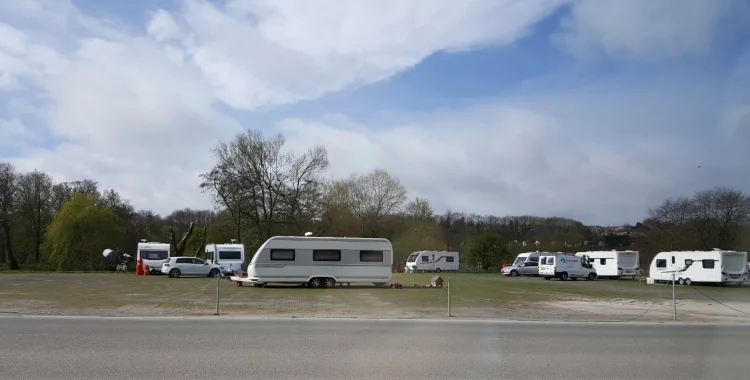
When someone enters your land without permission and starts to reside there this is called an unauthorised encampment, and they are trespassers.
This can now sometimes be an offence under The Police, Crime, Sentencing & Courts Act 2022. However, this is not always classed as a criminal offence by the Police.
The law provides various remedies to land and property owners to deal with trespassers.
The quickest and usually the first line of defence is to use Common Law.
There is a common law right for a landlord that allows them to instruct a Bailiff to evict trespassers from their land using reasonable force. The details of this are contained in Halsbury’s Laws of England, Para 1400, volume 45 of Fourth edition.
See Home Office Guide to effective use of enforcement powers: Part 1: Unauthorised encampments.
The landlord does not need to obtain a court order first. Common Law can be used after providing sufficient notice to the trespassers, and the carrying out a risk assessment by a competent person, using certificated enforcement agents or the bailiffs of a High Court Enforcement Officer.
The Bailiffs act as the landlord’s agent and can use only reasonable force to effect the eviction.
For example, without a court order they cannot break locks or break down vehicle doors or cut off clamps.The travellers can return once they leave although in our experience this rarely happens.
See article about Evicting from Land using Common Law.
Reasonable Force is not defined in law. The Government has published advice for Teachers on the Use of reasonable force which gives some guidance on how it should be interpreted.
“Whether the force used is reasonable will always depend on the circumstances of the case. The use of force is reasonable if it is proportionate to the consequences it is intended to prevent. This means the degree of force used should be no more than is needed to achieve the desired result.”
Our experience and case law has led us to believe that each case needs to be assessed individually.
Ultimately the decision on what force to use needs to be based upon the fact that if strong resistance is shown or threatened it does not cause an affray.
Please remember under common law the enforcement company is your agent. Not only can they be arrested for this offence but you as the landlord can be held both criminally responsible and responsible under civil law.
This especially holds true as the courts general view is there is a less violent way to achieve possession using a court order.
This does of course take much longer.
An order for possession needs to be gained from the County Court and then transferred up to the High Court as a Writ of Possession. This allows the High Court Enforcement Officer (HCEO) additional options to complete the eviction. The usual method is to assemble a team and invoke the powers of section 99 of the Court Act. This law places a duty on the West Midlands Police to assist the HCEO in the execution of the Writ.
In a recent case a landowner had an unauthorised encampment set up on his land overnight.
Our Birmingham Traveller Eviction team of bailiffs were deployed within 2 hours of receiving the call from the landowner. The team arrived on site and served the travellers with a notice to leave within 2 hours.
The travellers refused to leave and demanded money from the bailiffs as they claimed not to have money to pay for repairs on their vehicles so they could move.
The travellers were notified that neither the bailiffs nor the landowner would be doing this. They were again urged to depart within the 2 hours on the notice.
The travellers were very aggressive and put various obstacles in the way of their removal. As things were escalating the police were called. The team spoke with the police and agreed with them that due to the violence and anti-social behaviour of the travallers that a Section 61 notice should be issued by the police.
The section 61 notice gave them a further 4 hours to vacate. Our team stayed on site until they left a few hours later.
It was a fraught day for our Birmingham traveller eviction team, but they achieved their goals, and the landowner was grateful for the service.
We then provided an emergency security team to guard the property until concrete blocks could be deployed to prevent any further incursions onto the land.
Act fast and hire a professional enforcement company to use common law or other enforcement methods as soon as possible.
read more about the
Eviction of Travellers
and Gypsies service
This article was written by Andrew Coates, Authorised High Court Enforcement Officer and full member of The High Court Enforcement Officers Association, and current CEO of Quality Bailiffs.
Andy has a Level 4 diploma in High Court Enforcement, and over twenty five years of experience in the bailiff and investigation industry. He is a former governing council member of both CIVEA and ABI.
This article does not constitute receiving professional advice legal or otherwise and is meant for educational purposes only. All information is provided in good faith and is used at the user’s own risk. Enforcement Bailiffs Ltd, or its employees, are not qualified or insured to give legal advice and all clients should satisfy themselves of their own legal position before using or proceeding with any of the suggestions, strategies or procedures contained in this guide, and before instructing us.
read more eviction articles


Southern Region
| Southampton |
| 023 8192 0037 |
| southern@qualitybailiffs.co.uk |
Midlands Region
| Birmingham |
| 0121 582 1051 |
| midlands@qualitybailiffs.co.uk |
Northern Region
| Manchester |
| 0161 791 1735 |
| northern@qualitybailiffs.co.uk |
Southern Local Areas
| Bristol |
| Brighton |
| Canterbury |
| Maidstone |
| Reading |
Midlands Local Areas
| Cardiff |
| Derby |
| Leicester |
| Peterborough |
| Sheffield |
| Shrewsbury |
Northern Local Areas
| Carlisle |
| Darlington |
| Leeds |
| Middlesbrough |
| Newcastle |