
The May 2026 Enforcement Law Changes: One Month In, What Has Actually Changed?

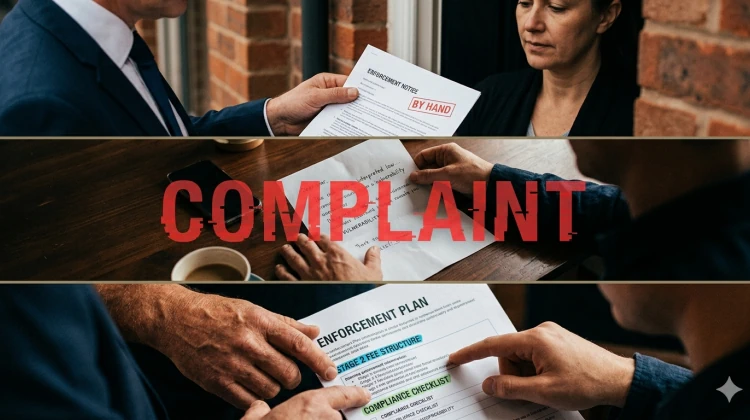
It has been just over a month since the Taking Control of Goods (Miscellaneous Amendments) Regulations 2026 officially shook up the enforcement landscape in England and Wales.
Introduced on 1 May 2026, these amendments brought longer minimum notice periods, a complete overhaul of the statutory forms, and an updated fee structure.
Before the rollout, the industry braced for a massive shift in how debts would be managed. Now that we are into June and the dust is starting to settle, we look at how these changes are playing out on the ground, and whether they have truly transformed debtor behaviour.
The short answer. Not as much as the regulators might have hoped.
1. Debtor Behaviour: New Rules, Same Patterns
The headline change of the May regulations was the extension of the minimum notice period from 7 clear days to 14 clear days. The legislative goal was clear: give debtors more time to engage and seek advice early.
However, a look at early performance data reveals that debtors are behaving exactly the same as they did under the old system.
Roughly the same percentages of individuals and businesses fall into the exact same predictable categories:
- The Avoiders: A large segment continues to completely ignore the newly formatted Notice of Enforcement.
- The Disputers: Many immediately attempt to dispute the validity of the underlying debt rather than tackling the reality of the enforcement notice.
- The Last-Minute Planners: A massive portion of debtors still wait until the absolute eleventh hour, the final day of the notice period, to reach out and request a payment arrangement or demand further time.
Giving people more days to respond has ultimately just shifted the time-line forward; it hasn’t fundamentally changed human nature or financial constraints.
To counter this inertia and encourage genuine early compliance, a significant number of clients have pivoted their strategy toward having notices served by hand.
By hand-delivering the paperwork during the initial stage, creditors are finding they can cut through the noise, bypass the immediate temptation for debtors to ignore the post, and force an earlier conversation before the 14 days lapse.
2. Vulnerability Claims: Forcing Agents to “Play Solomon”
The new regulations put a heavy emphasis on identifying and protecting vulnerable debtors. Unfortunately, a month into the new regime, enforcement agencies are seeing a deluge of vulnerability claims backed by little to no evidence.
A worrying trend has emerged where debtors state they are vulnerable under the mistaken belief that the label automatically wipes out the debt and means they do not have to pay at all.
What makes this particularly frustrating for enforcement agencies and creditors is that formal safety nets already exist. Very few of these debtors are taking advantage of the official Breathing Space regulations, which are specifically designed to pause enforcement legally while a debt adviser assesses their situation. Instead, they bypass the official channels and dump unverified claims on the doorstep.
This leaves creditors and enforcement agencies in the impossible position of “playing Solomon” — forced to make complex, pseudo-judicial judgments on a debtor’s mental, physical, or financial health without any of the actual evidence required to make a fair assessment.
3. The Rise in Complaints Over Creditor Refusals
One of the more frustrating friction points revolving around the finality of the notice period is a sharp rise in formal complaints when a creditor stands firm.
When a creditor says NO to a last-minute request for more time and insists on escalating the matter to an enforcement visit, it frequently triggers an immediate complaint letter.
Because the new statutory notices explicitly detail free debt advice options and point heavily toward debtor protections, there seems to be a misconception among some debtors that they have an absolute right to indefinite grace periods. When creditors exercise their legal right to move a case to physical attendance, it triggers friction and administrative pushback.
4. The Rise of “AI-Generated” Legal Complaints
Compounding the rise in paperwork is a highly modern operational headache: the explosion of complaints generated by Artificial Intelligence (AI).
More and more debtors are plugging their cases into AI chatbots to draft formal complaint letters and legal challenges. While these letters look incredibly polished, articulate, and formal at first glance, a quick review reveals they are deeply flawed.
These AI-generated complaints frequently provide an entirely inaccurate basis for their claims, hallucinating sections of the law and offering completely wrong interpretations of how the May 2026 regulations actually apply.
Dealing with these automated, pseudo-legal objections adds a heavy administrative burden on office staff, who must meticulously unpick and refute arguments that have no basis in actual law.
5. Operations: Adapting to the New Fee Structure
While debtor dynamics remain a stubborn constant, there is positive news on the operational side.
The transition to the new fixed fee thresholds and updated High Court enforcement stages initially required a lot of back-office adjustments. Just over a month in, both front-line enforcement agents and office administrative staff are successfully getting used to the new numbers.
Importantly, teams have adapted well to the new rules governing Enforcement Stage 2 on Writs of Control. Under the new regulations, agents must adhere to a much stricter escalation path before Stage 2 fees can be applied. Staff are now efficiently executing these structured workflows, ensuring compliance while protecting the creditor’s right to robust recovery.
Summary: A Shift in Process, Not in People
The first five weeks of the post-May 2026 era prove that changing the paperwork and the statutory timelines does not automatically rewrite how people react to financial stress.
For creditors and enforcement agencies alike, the day-to-day work remains remarkably familiar.
While teams have adapted incredibly fast to the practicalities of hand-serving notices and executing the new fee structures, navigating unverified vulnerability claims, managing AI-generated legal noise, and dealing with debtor avoidance will continue to be the real test of the industry moving forward.
We can help
Read more about the services we supply.
0208 090 2439
023 8192 0037
0121 582 1051
0161 791 1735
About the author
This article was written by Andrew Coates, Authorised High Court Enforcement Officer and full member of The High Court Enforcement Officers Association, and current CEO of Quality Bailiffs.
Andy has a Level 4 diploma in High Court Enforcement, and over twenty five years of experience in the bailiff and investigation industry. He is a former governing council member of both CIVEA and ABI.
Disclaimer
This article provides general information and does not constitute legal advice. It is essential to consult with a qualified legal professional for advice tailored to your specific circumstances.
More Articles
- Changes to Enforcement Law Coming into Force on 1 May 2026
- Why High Court Enforcement is becoming essential
- Options for Commercial Rent Arrears: CRAR vs Lease Forfeiture Explained
- Does the filing of a N244 stay enforcement?
- How to: Commercial Rent Arrears Recovery (CRAR) in 2026
read more industry news


