
Forfeiture of Lease

How to guide 2026
What is forfeiture of lease ?
Forfeiture of a lease is a legal process that allows a landlord to regain possession of a property from a tenant who has breached the lease.
Forfeiture occurs when the landlord exercises their right to regain peaceable possession against the wishes of the tenant.
This is usually where the tenant has breached a condition of the lease or has breached a covenant. The forfeiture is usually undertaken by a Bailiff (Certificated Enforcement Agent) who enters the property peaceably and takes vacant possession of the property.
Forfeiture is a contractual right under the lease which is a right preserved under Section 24 (2) of the Landlord and Tenant Act 1954.
Peaceable possession under the terms of most lease’s is gained by the landlord’s bailiff entering peaceably on ANY part of the land, which includes any outside compound.
Forfeiture for none payment of rent does not usually require any prior notice.
Uses of Forfeiture
Forfeiture of Lease is a good tool if you can’t execute Commercial Rent Arrears Recovery (CRAR) because the Bailiff (Certificated Enforcement Agent) can’t gain entry to the property. It can also be used where there are little or no goods to seize, or the goods on the site all belong to third parties.
At present, a landlord can forfeit a tenancy on several grounds depending upon the wording in the lease. The most common is none payment of rent. Other reasons include:
- Where the tenant breaches the terms of the tenancy.
- Insolvency where the tenant is made bankrupt, goes into liquidation or there is an insolvency arrangement such as an administration or the appointment of a receiver.
- Improper use of the property.
- Change of use without permission.
- Sub Letting.
- Nuisance behaviour or excessive noise.
The landlord can make a claim for damages for these breaches, but the landlord may also wish to regain possession of his property.
The landlord can only take action to forfeit the tenancy if the tenancy contains a “forfeiture clause”.
The forfeiture clause allows the landlord’s Bailiff (Certificated Enforcement Agent) to “re-enter” the premises following a breach.
The forfeiture clause in the lease would normally say something like “if the rent remains unpaid for a period of 21 days then the landlord may peaceably re-enter and forfeit the lease”.
The number of days can vary depending on what is specified in the lease. We have often seen other periods, such as 7 days and 14 days. Please check the lease.
Depending upon what the breach is for the landlord may or may not have to first serve the appropriate notice under Section 146 of the Law of Property Act 1925.
Contact our Commercial Lease Forfeiture Experts
To discuss your requirements contact one of our regional centres today to assist you with recovering your commercial property quickly and efficiently.
0208 090 2439
023 8192 0037
0121 582 1051
0161 791 1735
Non-payment of rent

If the breach of the lease is for non-payment of rent and the landlord has not done anything to waive the breach, then usually the landlord can forfeit the lease without giving any notice.
Non-payment is usually classed as being so bad that the landlord would not wish to continue with the lease.
The landlord must make sure that nothing is said or done to waive their right to forfeit the lease.
A Waiver may be construed if the landlord, his Bailiff (Certificated Enforcement Agent) or managing agent does anything that acknowledges that the lease is continuing, such as:
- sending the bailiff to execute a CRAR procedure
- agree an instalment plan
- issue legal proceedings
If this has occurred, then the landlord should wait until the period of rent is due then forfeit for that month / quarter rent.
See our 2024 updated article on Waiving the Right to forfeit the lease.
How to effect Forfeiture of Lease
A landlord can re-enter the premises and forfeit the lease in one of 2 ways. This will be by peaceable re-entry or via court proceedings.
Peaceable Re-Entry
By instructing a Bailiff / Certificated Enforcement Agent such as Quality Bailiffs to physically re-enter the premises.
The re-entry must be peaceable. If any violence is threatened or used, the landlord and the Bailiff (Certificated Enforcement Agent) may commit a criminal offence. This is under section 6 of the Criminal Law Act 1977.

You may only take Peaceable Possession by forcing an entry with a locksmith.
This basically means that if any person is present upon the premises at the time who opposes your use of force to gain entry, then you should abandon the action.
Forfeiture is best done when you know the property is closed and empty; late at night or before 6am.
Not to be used on Mixed property
This method cannot be used if the premises include a residential element and there is someone in residence.
In Pirabakaran v Patel 2006, the Court of Appeal clarified the position on whether commercial property can be re-entered when there is mixed use such as a flat above a shop used by the tenant. A similar case was also brought under Tan –v- Sitkowski [2007] EWCA.
See full article about Forfeiture of mixed use property.
Forfeiture by Court Proceedings
A landlord can also forfeit the lease by commencing Court proceedings to obtain possession.
If the Court makes an order for possession the tenancy is treated as coming to an end on the date when the proceedings were served on the tenant.
Court proceedings tend to be expensive and take much longer than forfeiture by peaceable re-entry.
Relief from Forfeiture
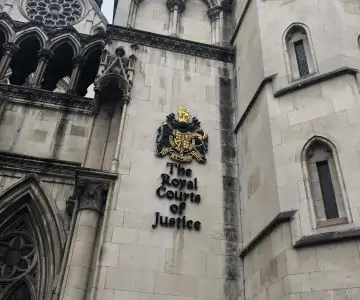
A tenant, sub-tenant or a lender can apply to the Court for relief from forfeiture to allow the tenancy to continue. In practice however the Court can impose conditions, which might require the tenant to pay any rent arrears or remedy the breach before this is heard.
Goods Inside
If a tenant is still in occupation, then they still own the goods inside. The goods inside are covered by Torts (Interference with Goods) Act 1977.
This puts the landlord in the category of an Involuntary Bailee who through no fault of their own end up being responsible for these goods until they are returned to the rightful owner.
If another person i.e. the landlord or their agent sells or disposes of those goods then the tenant can sue them for conversion, trespass or negligence.
There are a few courses of action a landlord can take and it would always be best to take legal advice from a suitably qualified person.
Torts Notice
One way is to allow the tenant to remove their goods therefore removing the problem.
A Torts inventory should be completed by a qualified Bailiff and then a Torts notice should be posted on the door and served in the prescribed manner giving the tenant at least 14 days notice to remove their belongings.
If they ask for this access within the 14 days then they should be given supervised access to collect their goods.
If they fail to apply to remove their goods within this time then subject to legal advice the landlord can dispose of them and keep account of what happened to them.
Quality Bailiffs can help with this with our Torts service where we draw up the notices, do the inventory, serve the notices, liaise with the tenant and allow supervised access to remove possessions. We can also liaise with contractors to arrange for clearance of goods to be taken to auction.
Supervised re Entry
Tenants cannot be simply given the key and allowed access to remove their belongings.
This is because they could simply re-occupy and take peaceable possession themselves.
You would then have to start the forfeiture procedure over again or go through the court.
The solution is to hire Quality Bailiffs to supervise their entry and removal of possessions. Usually you can get the tenant to pay as legal and other expenses are usually the tenants responsibility under the lease.
The purpose of supervised access is to ensure a bailiff remains on the property at all times keeping possession, therefore not giving the ex-tenant chance to claim vacant possession again.
Sometimes tenants come back
These days in about 20% of cases tenants break back into the property therefore securing peaceable re-entry themselves.
On some occasions the Police will treat this as the criminal offence of “breaking and entering”. However more and more the Police are saying this is a civil matter and refusing to get involved.
The only solution we have found that seems to work in 90% of cases is when the client arranges for a security officer presence in the property for the first 24/48 hours. This seems to take the sting out of the tail.
With security present the debtor cannot break in without being arrested for breaking and entering. The tenant does not know how long the occupation is going to last. The tenant is usually then forced to negotiate or to at least calm down and review his options. This gives the landlord time to arrange other security measures such as shutters or alarms.
Using Forfeiture of Lease Against Insolvent Tenants
When dealing with insolvent tenants, landlords may consider forfeiture of lease by peaceable re-entry as a strategic way to regain control of their property. This legal remedy can be effective, but it must be exercised with caution and in strict compliance with the law. The right to forfeiture depends heavily on the nature of the tenant’s insolvency - whether they are in administration, liquidation, or subject to a voluntary arrangement.
In some cases, forfeiture of lease is permitted even during insolvency proceedings, but landlords must be aware of statutory restrictions and potential court-imposed stays. Attempting peaceable re-entry without proper legal grounds can expose landlords to claims of unlawful eviction or breach of insolvency protections.
Before proceeding, landlords should review the lease terms carefully and seek legal advice to confirm their right to forfeit. Understanding the nuances of insolvency law and how it interacts with lease forfeiture is essential to avoid costly disputes and ensure the process is legally sound.
| Insolvency Type | Availability |
|---|---|
| IVA during the 14-day Moratorium | Yes |
| IVA after Moratorium when it is approved | Yes |
| Any new debt after IVA agreed | Yes |
| Bankruptcy | Yes |
| Compulsory Liquidation | Not without leave of court or consent of liquidator |
| Members or creditors Voluntary Liquidation | Yes |
| Administration | Not without leave of court or consent of liquidator |
| CVA during the Moratorium | Not without leave of court |
| CVA after Moratorium when it is approved | No |
| Any new debt after CVA agreed | Yes |
| Receivership Law of Property Act | Yes |
Forfeiture after a company becomes insolvent
SBP 2 SARL v 2 Southbank Tenant Limited [2025] EWHC 16 (Ch)
This case may have significant implications for landlords seeking to forfeit commercial leases, particularly concerning insolvency-related forfeiture clauses and the process of peaceable re-entry.
Summary of the key takeaways:
- Insolvency Clause Interpretation
- The High Court’s ruling focused on the interpretation of forfeiture clauses within the lease agreement, especially those related to insolvency.
- The court determined that when a lease’s forfeiture clause references sections 122 and 123 of the Insolvency Act 1986, it implies that a formal court determination of insolvency is required before a landlord can exercise their right of re-entry.
- This clarifies that simply alleging insolvency may not be sufficient; a formal legal declaration is necessary.
- Implications for Peaceable Re-entry
- This judgment has a direct impact on the practice of peaceable re-entry. It adds a layer of complexity to situations where landlords seek to re-enter premises based on alleged tenant insolvency.
- Landlords must now be acutely aware that if their lease agreements tie insolvency to specific sections of the Insolvency Act, they likely need a court order confirming insolvency before they can proceed with forfeiture.
- Emphasis on Lease Agreement Clarity
- The ruling underscores the importance of precise and unambiguous language in lease agreements.
- Landlords and tenants should carefully review and understand the forfeiture clauses to avoid future disputes.
- Overall Impact
- The case provides greater clarity on the legal requirements for forfeiture in insolvency-related scenarios.
- It reinforces the importance of landlords following due process.
- It highlights the need for careful consideration of lease clause wording.
In essence, this judgment serves as a reminder that landlords must adhere to the specific terms of their lease agreements and obtain proper legal confirmation when relying on insolvency as grounds for forfeiture.
Conclusion
Forfeiture of lease is one of the most important weapons in a landlord’s arsenal for dealing with rent arrears and other breaches of the lease.
It is quick, cost effective and nearly always gets the results you want.
There are a few pitfalls and getting good legal and enforcement advice is very important so that this works and things don’t go wrong. If done right this is very powerful but if done wrong could cost you dearly.
Forfeiture of Lease – Frequently Asked Questions
Forfeiture of a lease is a legal process that allows a landlord to terminate a commercial tenancy before the end of the lease and regain possession when the tenant breaches the lease terms. It typically occurs for breaches such as non‑payment of rent, unauthorised subletting, or misuse of the premises.
The most common grounds for forfeiture include:
- Non-payment of rent
- Breach of repair obligations
- Unauthorised subletting or alterations
- Improper or unlawful use of the premises
- Tenant insolvency
It depends on the breach:
- Non‑payment of rent: No Section 146 notice is required.
- Other breaches (e.g. repairs, user clause): A Section 146 Notice must usually be served, outlining the breach and giving a reasonable opportunity to remedy it.
Peaceable re‑entry is when a landlord or their Certificated Enforcement Agent enters the premises and changes the locks to regain possession peacefully.
Court possession proceedings are advisable when:
- Peaceable re‑entry may risk confrontation
- Someone is present and objects to entry
- The breach is complex or disputed
A landlord waives (loses) their right to forfeit if, after knowing of a breach, they act in a way that treats the lease as continuing - for example, accepting rent or negotiating payment plans. Once waived, the landlord must wait for the next breach before forfeiting like failure to pay the last month.
Yes. A tenant may apply to court for relief from forfeiture, asking the court to reinstate the lease.
It depends on the insolvency type and the lease wording. Key points include:
- Forfeiture is often allowed for bankruptcy, IVA, receivership, or post-CVA new debt.
- It may require court permission during administration or compulsory liquidation.
Not normally. Peaceable re-entry cannot be used where the premises contain a residential element that is occupied at the time, due to statutory protection for dwellings.
If goods are left behind, the landlord becomes an Involuntary Bailee under the Torts (Interference with Goods) Act 1977. A formal Torts Notice should be served, giving the former tenant time to collect items. Disposing of goods without following this process can expose the landlord to claims for conversion or negligence.
Break-ins occur in a significant number of cases. Police may treat it as civil unless criminal damage occurs. Many landlords mitigate this risk by placing security on site for 24–48 hours after forfeiture to maintain possession and prevent re-entry.
Yes. The legal framework differs substantially, and the right to forfeit (peaceable re-entry) does not operate the same way as in England & Wales. Landlords must follow the procedure relevant to their jurisdiction.
Improper forfeiture - such as entering while someone is present or misusing force - can expose the landlord to claims for:
- Damages
- Unlawful eviction
- Interference with goods claims
- Peaceable Re‑entry: Can be completed immediately.
- Court Proceedings: Typically take months with court delays.
Best practice is to:
- Review the lease for a valid forfeiture clause
- Identify the breach clearly
- Avoid any action that could waive forfeiture
- Seek legal or enforcement professional advice
Contact our Commercial Lease Forfeiture Experts
To discuss your requirements contact one of our regional centres today to assist you with recovering your commercial property quickly and efficiently.
0208 090 2439
023 8192 0037
0121 582 1051
0161 791 1735
About the author
This article was written by Andy Coates, Authorised High Court Enforcement Officer and full member of The High Court Enforcement Officers Association, and current CEO of Quality Bailiffs.
Andy has a Level 4 diploma in High Court Enforcement, and over twenty five years of experience in the bailiff and investigation industry. He is a former governing council member of both CIVEA and ABI.
Here to Help
Quality Bailiffs has over twenty-five years of experience in completing Possessions, High Court Enforcement, seizure, removal, and the sale of goods especially in the commercial rent sector.
read more lease forfeiture news articles
Disclaimer
This article does not constitute receiving professional advice legal or otherwise. It is meant for educational purposes. All information is provided in good faith and is used at the user’s own risk. Enforcement Bailiffs Ltd, t/a Quality Bailiffs, Frank G Whitworth, Derby Legal Services, or it’s employees, are not qualified or insured to give legal advice. All clients should satisfy themselves of their own legal position before using or proceeding with any of the suggestions, strategies or procedures contained in this article, and before instructing us.


